00:00
/
00:00
Dirty Money: A Year Undercover in Reform UK
A yearlong investigation into Nigel Farage’s fundraising operation reveals a plot to break the law by bringing foreign money into British politics
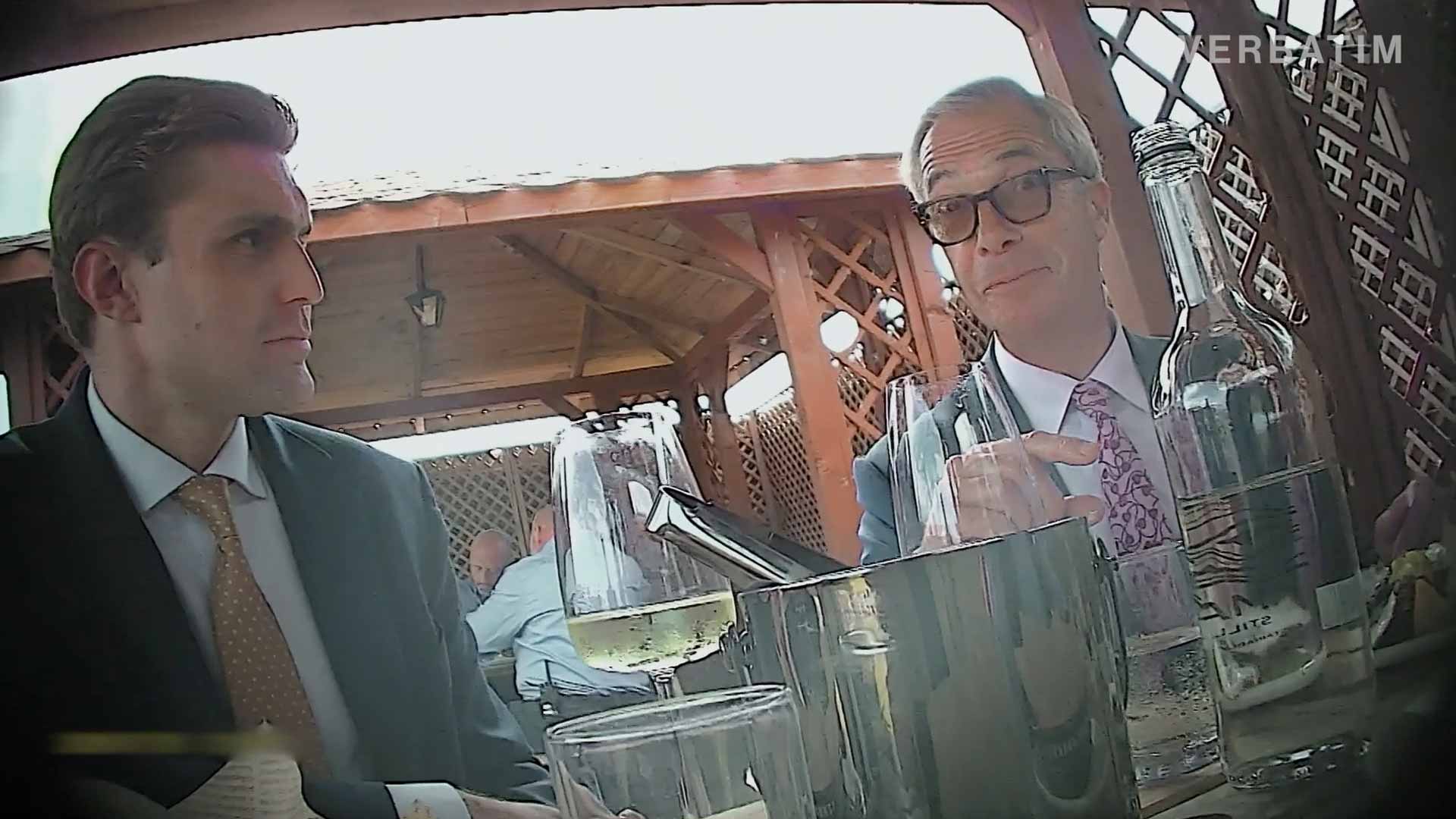
On a sweltering afternoon in late July, Reform UK leader Nigel Farage sat down for lunch with a wealthy American businessman at a seafood restaurant near Clacton-on-Sea. Over white wine and oysters, the Reform leader charmed his guests with anecdotes about President Trump and stories of the D-Day landings.
To Farage, his lunch companions were Ian Lockwood and his Anglo-American son, William. Impeccably dressed and intensely private, Ian had flown in from Wyoming to finalise a £500,000 donation that his son had spent the last few months negotiating with the party.
But the men were not who Farage believed them to be. Ian Lockwood was a Broadway actor, his son William, an undercover journalist for Verbatim.
Farage arrived at the Harbour Lights restaurant fresh off the Clacton by-election campaign trail, defying the midsummer heat in a full suit and tie, preceded by three large bodyguards. A loud cheer went up as he entered, and he stopped to pose for photos with a 70th birthday party before warmly greeting his American guest.
Reform had been keen to impress Lockwood, offering the use of a helicopter for the last leg of his journey from America, a proposal he had politely declined. Over lunch, the Reform leader celebrated Lockwood’s funding of a series of opinion polls commissioned by his chief of staff and head of policy, and thanked him for his offer of a significantly more substantial donation.
Much of what Farage understood about the lunch was false. But the polling scheme, and the money that paid for it, were real. Now, a yearlong Verbatim investigation, captured on hidden camera, exposes a plot – masterminded by the Reform leader's top advisers, and welcomed by Farage himself – to break election law by funnelling foreign money into British politics.
I won’t breathe a word
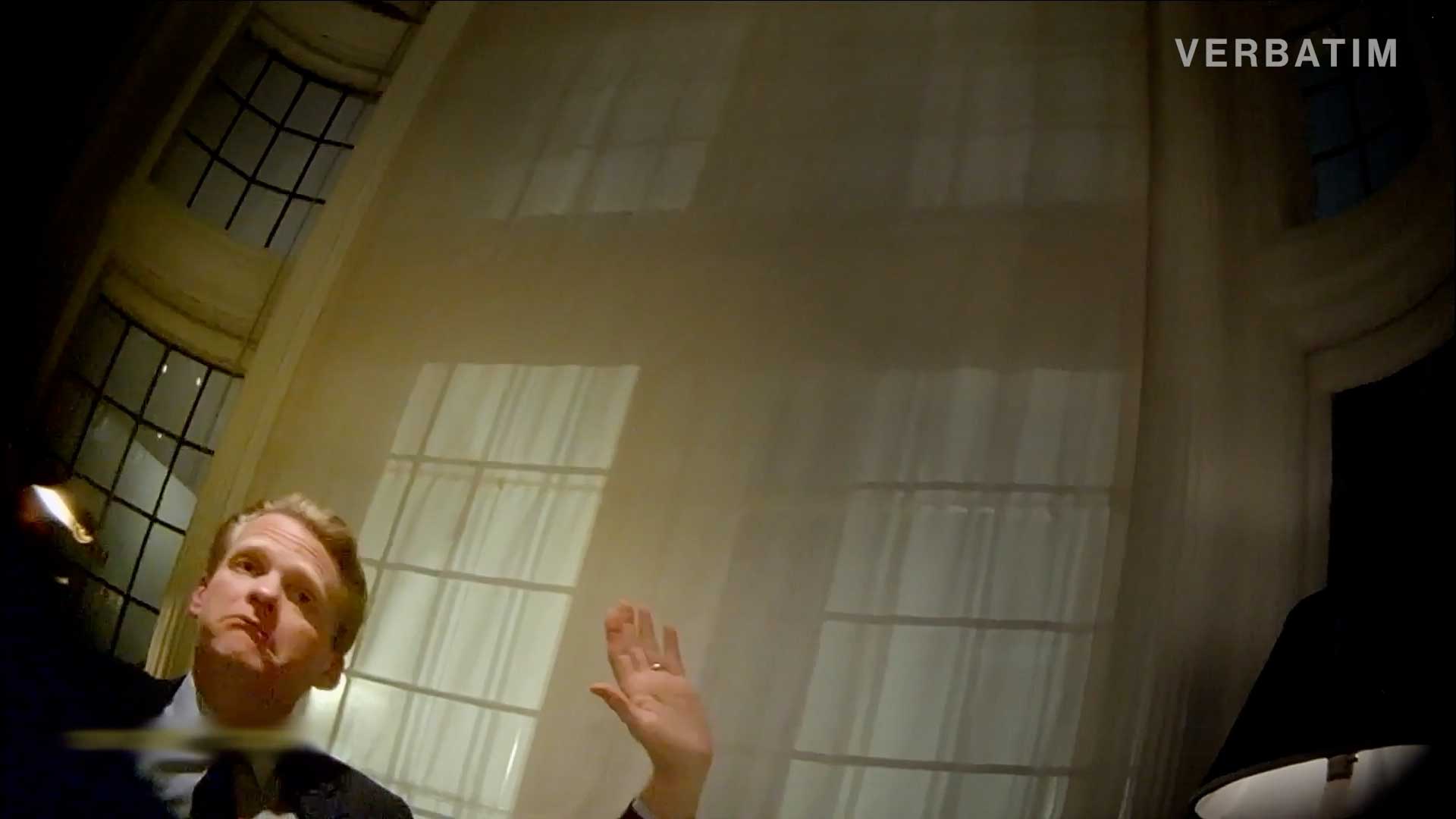
Mark’s Club in Mayfair is a fixture of the British establishment, a listed Georgian townhouse replete with Persian rugs, oil paintings, and discreet nooks perfect for private conversation. On a dark, rainy evening in January 2026, William Lockwood, heir to his father’s fortune, had arrived to discuss a proposal with Cambridge academic and Christian nationalist influencer, James Orr.
The pair had first met in September at the National Conservatism conference in Washington D.C. – the preeminent gathering of the New Right political movement – where Orr agreed to help William direct his father’s money to right-wing causes in the UK.
By now, the pair had become regular lunch companions and at their previous meeting Orr had shared some important news with William: “Entre nous. Nigel [Farage] has asked me to be his senior adviser,” Orr said, “I’d be reporting to Nigel. One of three people reporting to Nigel. So that gives me enormous power in the party if I want it.”
“Basically, the job will be fundraising. So, I’m raising a lot of money for the party,” Orr said.
Now, over gin and tonics at Mark’s, Orr had a pitch: would William’s company pay for an opinion poll that Reform had commissioned as part of its local election campaign? The aim, he said, would be to conceal Reform’s role in commissioning it and thereby increase its credibility.
It is illegal for British political parties to accept money from foreign sources, even indirectly. But in a memo shared with Orr on 27 October, William had already made it clear that any cash would come from a family office based in the US state of Wyoming.
“JLP are going to run a poll this weekend,” Orr said, “so we're going to run this £18k plus VAT… I said, there may be somebody I could think of who they could send an invoice to. That would just be a suggestion. It's not an indirect campaign party contribution. Totally legit”.
But Orr also emphasised that discretion around such an arrangement was paramount. “I won’t breathe a word of this to anybody, obviously…. Nigel doesn’t know, won’t know. It’s the kind of thing he would rather not know”.
William agreed to consider the proposal.
00:00
/
00:00
A few days after the meeting at Mark’s, Orr shared a link with William. The poll had been published on the front page of The Telegraph under the headline “Exclusive poll: Labour would face wipeout in cancelled elections,” where it was described as “polling for The Telegraph”. Orr told William that the results were better than expected and said, “Nigel is over the moon”.
Orr arranged for the pollster, JL Partners (JLP), to share an invoice with the American company and Verbatim subsequently wired the £18,000 to the pollster from the bank account of a US company set up for the investigation.
On 16 February, Orr messaged William after the government rowed back on plans to cancel local elections saying: “Your financial backing of that poll was a huge part of our campaign, so thank you. Gave us massive momentum and public credibility.”
Reviewing the arrangement, Gavin Millar KC, one of Britain’s leading election lawyers, told Verbatim: “An expense is being incurred by Reform, because they have commissioned the polling. They want the polling for their own reasons. They even agreed the amount of money.”
“This is a donation just as much as giving a gift of money directly to Reform. It's money that's coming from America. That's a foreign donation that's prohibited in our law. An arrangement is being proposed to cover up the fact that it's an impermissible donation,” Millar said, “and that can be a criminal offence.”
A bit of informal rule-bending
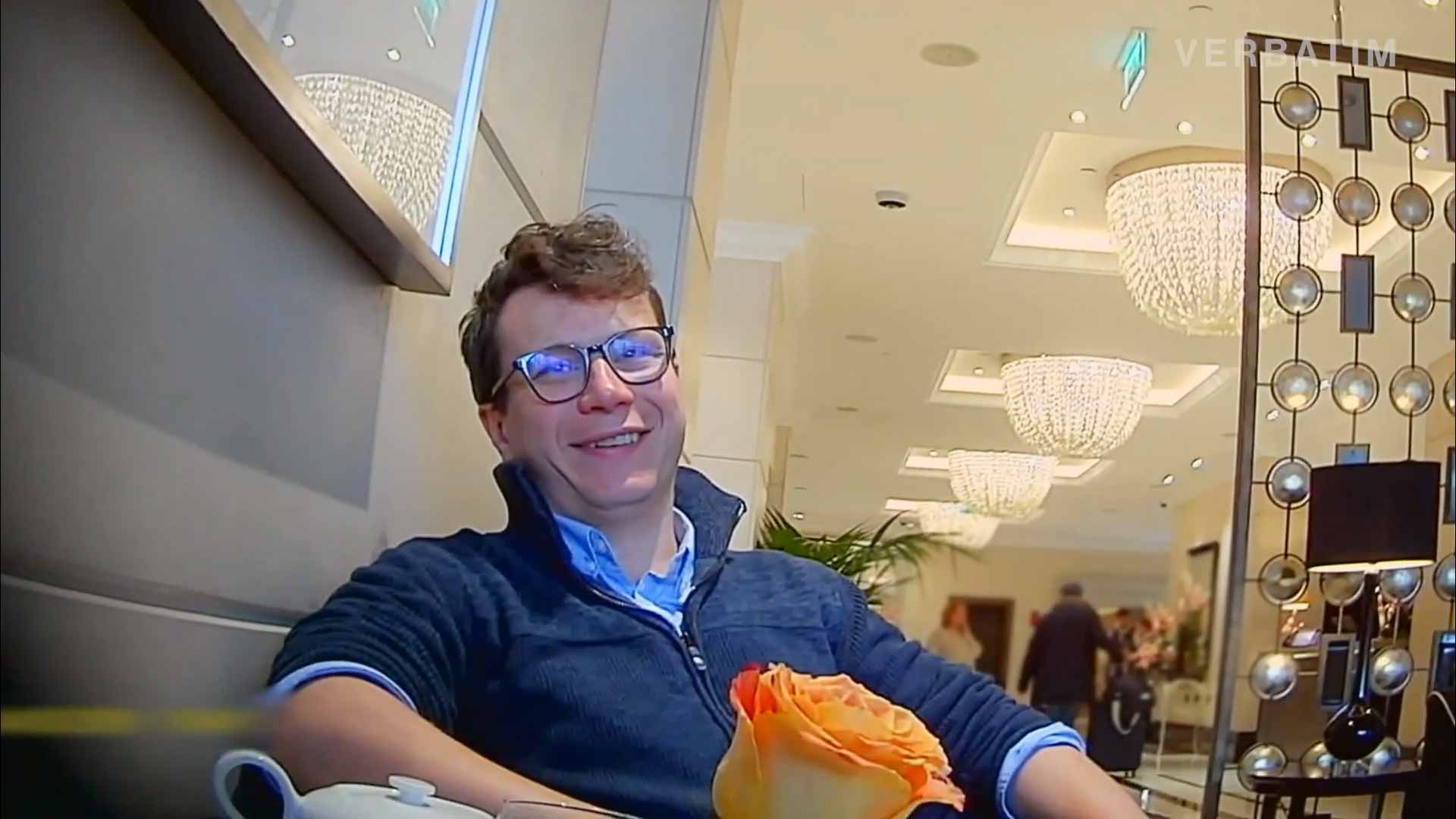
The Intercontinental on Park Lane is just a short walk from Mark’s Club, but it feels a long way from the old money world of Mayfair. On March 4, William had come to meet James Johnson, the pollster who carried out the work that made the front page of The Telegraph.
Johnson previously advised Theresa May in Downing Street, but nowadays moves between New York, New Orleans, and London, running his company, JLP. Over coffee, he explained how Nigel Farage’s chief of staff, Dan Jukes, had commissioned the polling that ended up in The Telegraph.
“Basically, the way that that worked… Dan [Jukes] gave me a call and said, look we want to do this polling of councils to show X. Can you guys do this? Gave him three options of quotes. Came back, asked for a slightly bespoke thing, we came back and then we just went and did it. Kept him in the loop”.
There is no suggestion that Johnson broke the law. But he told William that concealing the poll’s origin was a breach of British Polling Council rules, the voluntary body that regulates the industry. “I think that there is a little bit of like informal rule bending that we did with our last one. When we published those results, we should have disclosed who the client was”.
“We said the client was The Telegraph. And The Telegraph doesn’t care because they love the fact that they can say this is our poll.”
He explained that he didn’t mind The Telegraph claiming the poll as their own “because it looks like media people are commissioning it”.
When William asked if that was preferable to the journalists reporting that the poll was commissioned by Dan Jukes, Johnson replied: “Yeah, well indeed. And that's never going to happen, because we'd never let that happen”.
00:00
/
00:00
We could easily get away with it
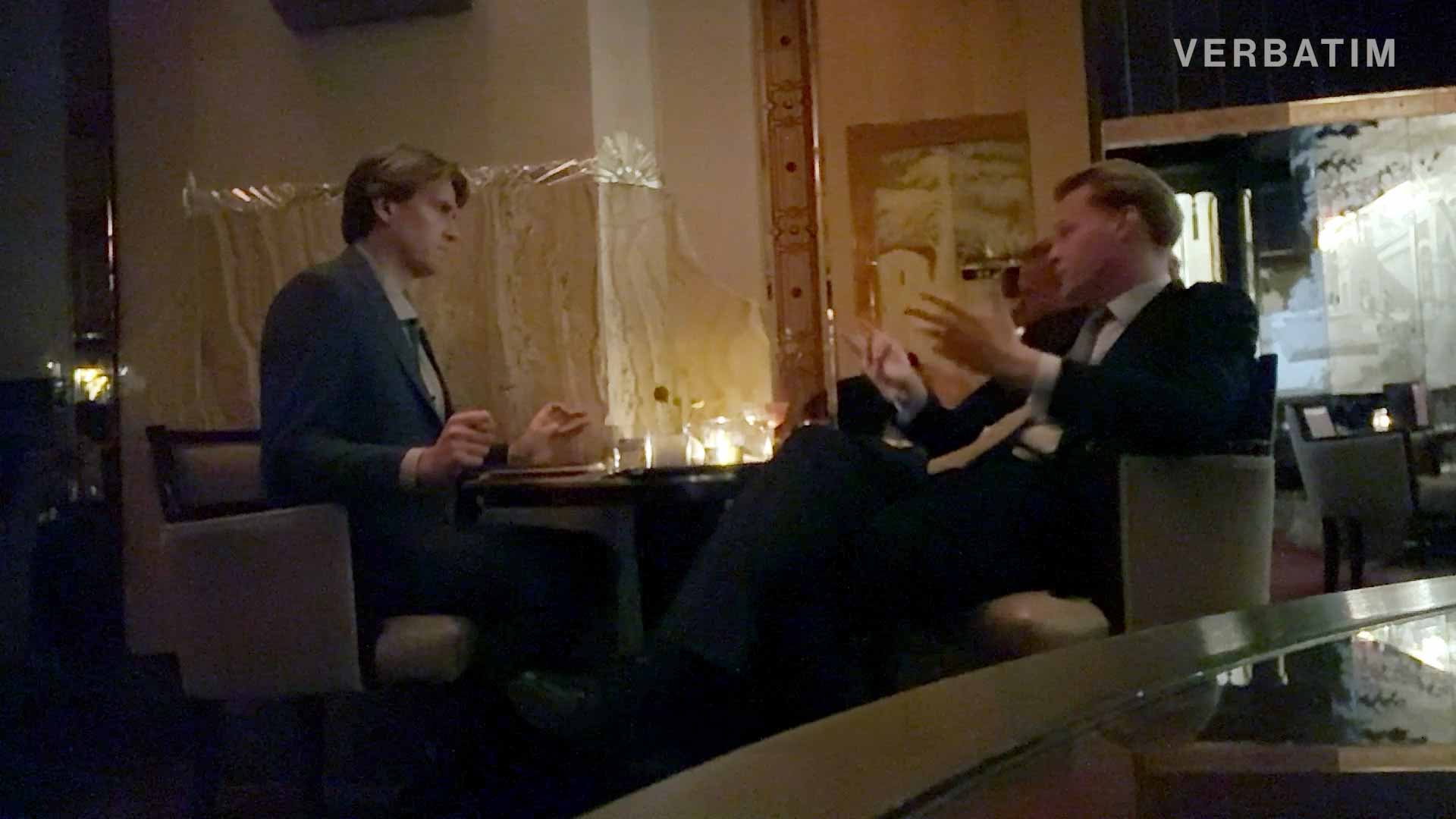
On 25 March 2026, the UK government published the Rycroft review, which recommended caps on political donations for Britons living abroad. On 31 March, over cocktails at Claridge’s, Orr outlined the problem the party now faced. “We just don’t have British resident donors, British entities, that would support us. That's the grim reality”.
He asked William to pay for more polling. "It would be nice not to have to spend money” Orr said, explaining that “it would help us a lot.”
This time, Orr said Reform needed polling to inform a speech that Suella Braverman was due to give on St George’s Day. He conceded that “if there was any way of seeing it, it would technically be a donation in kind,” but promised Reform would not disclose anything. "Am I gonna tell anyone, [...] obviously not, so the reality is we could easily get away with it.”
He joked that they could “literally do the old John Le Carré - you print it off, put it in a brown envelope, drop it off somewhere like, I don’t know, outside Claridge’s, Grosvenor Square. You leave a little white chalk mark on the postbox and I go ‘uh-huh’”.
Orr dismissed the Electoral Commission, the body charged with investigating breaches of election law, as “completely useless.”
“They're just so dumb and ineffective... it's not a special force office, you know it's not like Scotland Yard. They're just, they're pretty useless. It's just, they're only technical breaches,” Orr said.
00:00
/
00:00
The Braverman invoice never materialised. But Orr soon called with another proposal, asking William to pay for a £4,500 poll related to the party’s “Vote Reform, Get Starmer Out” slogan for May’s local elections.
“We've done a cheeky poll, which is coming out on the Telegraph today, I think, on this theme, at least Dan [Jukes] tells me… So, I just thought maybe that's very similar to the arrangement last time. I mean, I don't know if it's a little bit unsatisfactory that you hadn't sort of formally commissioned it, but I guess the idea is, could JLP send you an invoice?”
In fact, the results had already been published in The Telegraph the day before, again with no mention that Reform had commissioned the poll. William agreed to consider it, and Orr put him in touch with Dan Jukes, Nigel Farage’s de-facto chief of staff.
Amazing sweet spot
Jukes is one of Farage’s longest-serving officials, having worked with Reform’s leader at UKIP and then during the campaign for Britain to leave the EU. As he later told William: “I’ve been trying to make Nigel Prime Minister since I was sixteen.”
On 13 April, William and Jukes met at Brown’s Hotel in Mayfair. Jukes had cancelled a campaign visit to Scotland with Farage to see William in person and was keen to explain how important the off-the-books polling had been to Reform’s press operation.
“It was completely hands-off, fingerprints-off. And yet it was a big story in The Telegraph on page six, which stood up the public support for our slogan, right, so those little clandestine projects are so valuable for the sake of four and a half grand."
Jukes explained why funding polling was a great way to contribute to Reform. "What you're doing right now means that you can contribute” Jukes said, “it's an amazing sweet spot.”
“You can contribute… with relatively good value for money, make a huge impact, and they don't show up anywhere in public records,” Jukes said.
Responding to Jukes’ comments, Gavin Millar KC said: "It's very concerning that a senior representative of a major political party should be talking like this, because it's completely contrary to the spirit and the letter of our legislation."
Jukes then asked whether William would be able to pay for the “Vote Reform, Get Starmer Out” poll and when William confirmed, Jukes responded: “Okay, that's amazing. That's amazing”.
After the meeting, Jukes followed up via WhatsApp, again asking if William could pay for the poll. Soon after William confirmed, James Johnson emailed him an invoice for £4,500 and Verbatim reporters again wired the money from the US LLC.
The revolution must be paid for
Six weeks later, on 3 June, Orr invited William to Reform’s annual donor dinner at Oswald’s, a member’s club in Mayfair, hosted by Farage and Nick Candy, the party’s billionaire treasurer. Tickets were priced between £10,000 and £50,000, but Orr waived William’s fee and seated him at the top table, opposite Farage.
It was an extravagant event, with Farage serenaded by a roaming six-piece band in front of a jubilant crowd of millionaires and Reform MPs. Moneyed young Reform-world operators like George Cottrell and Andrew Barclay packed out the dedicated cigar terrace, as donors mingled with Richard Tice, Suella Braverman, and Lee Anderson. Candy worked the room, pressing guests for large donations.
The next morning, Orr messaged William to ask if he could pay for two polls Reform had commissioned, including one of trade union members that had been covered on the front page of The Times a few days earlier. William agreed to pay for one of them and James Johnson quickly supplied an invoice for the union poll. Verbatim reporters later wired £10,000 to JLP from the US LLC. There is no indication that the paper was aware that Reform commissioned the poll.
This took the total amount donated by the American company to Reform to £32,500 in just five months, but both Orr and Jukes were also keen to secure a larger, formal donation to the party.
On May 19, William had met with Jukes again at the Westminster Arms, a short walk from the Houses of Parliament. Over drinks, William explained that because his father’s company was American, it would be difficult to give to the party directly and instead “constrain us to probably stick to the polling stuff” unless Jukes could think of other options.
Jukes emphasised the scale of the fundraising task facing the party and the importance of major donors like Ben Delo and Christopher Harborne. “Our operating costs are over a million a month,” Jukes said, “The revolution must be paid for.”
William again explained that a formal donation would be complicated because the money belonged to an American company. “It’s going to take me a bit of work to get it over the line. It's also going to take me some admin work on the back end, right? I still don't have an Ltd. [UK limited company], I need to figure out the movement of the money, that kind of stuff”.
Jukes had an answer, William himself could be a conduit for the donation. “You do realise that you can do it,” Jukes said.
William repeated that his problem was “getting the money over here”, but Jukes had an answer, claiming that several Reform donors had given money via their children.
“Actually, that kind of just strikes me as kind of, as a solution,” Jukes said, “It's the father and it's the son. So that's one of the ways in which we do it.”
After reviewing the footage, Millar told Verbatim: "The law is absolutely clear. The legislation requires that the intermediary — that would be William — gives written details to the political party of his role and of who the true donor is. And that should immediately lead to the party saying: no, we can't accept it… What's being discussed is a way to avoid that situation arising and then being able to take the money without compliance with the law."
"It's an obvious way to try and sidestep the legislation. If the money is coming in reality from abroad, you find somebody in this country who would be a permissible donor, and you set them up as the donor — when in fact it's really a foreign, impermissible donor."
“It's theoretically possible that a representative of a political party might not know the law in this area. But we're talking about the chief of staff to the leader of the party. These are really basic concepts in our donations law. Number one, you can't take impermissible donations. Number two, you cannot set up a scheme to make it appear that an impermissible donation is a permissible donation."
Jukes then asked how much money was on the table and William explained that he had already spent most of the family office’s philanthropic budget, but that a donation to Reform could also be justified as part of its commercial operations. To which Jukes responded: “You know, if Nigel makes it to Number 10, you're having a pint with who's effectively going to be his chief of staff at Number 10. If that isn't a business interest, I don't know what is”.
William replied that £500,000 would be a “realistic first salvo.”
Your father has deniability
Separately, Orr also sought to land a formal donation. On 9 July, two days after Farage had called a by-election in response to the growing scandal over his finances, Orr agreed to meet with William at Brown’s Hotel, where he enquired about when William’s father would next be in London.
William told Orr that his father would be arriving soon and that “the family office money is available… I’ve been here for a year, so I’m fine.”
Upon hearing William would qualify as a permissible donor under new residency rules, Orr celebrated with a high-five.
Orr also said that Reform was “too reliant on these two big whales”, referring to crypto-billionaires and Reform mega-donors Ben Delo and Christopher Harborne, but that they didn’t need any more money for polling, preferring instead to focus on securing a formal donation.
“The war chest is in very good shape. So, thank you, but I think the best thing you can do now- it's great that we're getting to the point where we can have you out of the closet for us, and then we don't have to worry about, it's just a normal, if you needed to fund something on the side, we just declare as a donation in kind.”
“And then, if it's your name, you're the donor, your father has got deniability, your family office has got deniability, it's just you as an individual,”
Millar told Verbatim: “Let's say the party gets a gift of cash or is offered a gift of cash, they have to decide whether it's from a permissible donor or not. That obligation is theirs. They're policing the system themselves. Making the inquiries, acting as the police person in that situation. And if they can't establish positively that it is from a permissible donor, they have to give the money back, right? So that whole system is fundamental to the legislation. And if it's not complied with, if the treasurer of the party doesn't ensure that that happens, there is a potential for an offence to have been committed”.
By this point, Farage's closest aides had accepted tens of thousands of pounds in donations from a foreign company and were arranging to take a great deal more. Orr had claimed that the scheme would never reach Farage. Verbatim decided to seek a meeting to see if Farage was aware of the scheme, and whether he would intervene to put a stop to it.
A massive Americophile
In late July, midway through the Clacton by-election, William contacted Jukes to set up the meeting. Jukes agreed to organise things and, once the Lockwoods had declined the offer of a “chopper,” a date was set for 28 July.
The night before the meeting with Farage, William introduced Orr to his father Ian over a glass of red wine at Mosimann’s, a storied Knightsbridge restaurant. Orr took the opportunity to thank Ian for his money and said in the future he would love to discuss what the party would do with the proposed formal donation.
As the evening ended, Orr claimed that Farage was actually already aware of the polling scheme: “I've told him that. He might not remember but, it's fine for you to talk to him about it. He doesn't like talking figures. So, he's aware of the support, he doesn't go into the weeds on numbers, but he knows that you're a significant donor. And he's really looking forward to meeting [Ian]”.
The following afternoon, Ian and William Lockwood rented a car and drove out to the Essex coast to meet with Farage and Jukes at Harbour Lights restaurant in Walton-on-the-Naze.
Under the watchful eye of Farage’s bodyguards, Ian laid out the polling scheme in detail. “I run an American Family Office, and I haven't been able to donate directly up to this point, but I was thrilled to be able to pick up the tab for the polls that you had commissioned. When I saw the third poll on the front page of the Times… I thought, well, all right, these are people who know how to spend my money”.
Farage showed no surprise and said, “Yes, that was great… It worked. Boom.”
The Reform leader went on to describe the polling as providing “bang for buck… for a relatively modest investment. Yeah, amazing. Front page of the Times”.
As the plates were cleared away, William told Farage that “obviously the support that we've offered so far had to be necessarily private, discreet. But the mechanism now for this next phase is we've had some discussion with Dan, with James”.
Farage interrupted: “it's all above board, yeah.”
William agreed that it was, before explaining how it would work. “It'll be me, so I'll be the registered donor. And so, I think there'll be some conversations, necessarily, you know, lawyers, back office, and so on. But then Dad will send the money to me. And then as soon as that's done, all of those conversations are had, then the money's available”.
Farage made a point of thanking William and Ian. 'Both of you. Both of you, thank you”, before saying 'it's very important"… And of course, I'm a massive Americophile as well”.
00:00
/
00:00
Responding to the footage, Gavin Millar said: "Mr Farage appears to know that the American company has paid for the polling, and it's surprising and concerning that he doesn't raise any questions about that. He appears to have allowed it to go ahead — and indeed to be approving it… These basic concepts should be known to the leader of a major political party. I assume they are known to him. Yet he's approving this arrangement."
“There is enough being said, in the presence of Mr Farage and to Mr Farage, for it to be a red flag — for it to be understood as the reality that this money is coming from an American in a disguised form. And he should be questioning that… On the contrary, he seems to be quite happy to receive the money."
"It's particularly concerning that this happens when there have been recent and very high-profile allegations against both Reform and Mr Farage in relation to the acceptance of donations."
As the meeting finished, William reiterated to Farage that “it'll be [my father] to thank, but it'll be my name on the register, and I couldn't be more excited”.
“Well, I hope he’s enjoyed it” Farage replied.
Later that evening, Jukes messaged William saying: “That was super awesome today.” A few days later, Jukes called William and described how Reform wanted to spend some of the £500,000 donation on vetting potential parliamentary candidates for the party.
We asked Reform UK and Mr Farage to comment on the findings of this investigation. They did not do so but we understand the allegations are denied.
We asked Mr Jukes and Mr Orr to comment on the findings of this investigation. They did not do so but Verbatim understands they deny the allegations in full.
JL Partners said it holds itself to high standards. A spokesman said: "Despite there being no concern about the accuracy of our work, the report did reveal weaknesses in our procedures. For that reason JL Partners is reviewing those procedures in order to eliminate possible grey areas and ambiguities and strengthen our safeguards for the future."
A spokesperson from Telegraph Media Group said: "We are reviewing our future relationship with this polling company, as we believe we have been misled.”
"As a matter of precaution we have suspended the relevant articles while The British Polling Council conducts a review."
The Times said it “was not made aware of Reform’s involvement in commissioning and arranging payment of the poll”.